Dippy Eggs with Toast Soldiers: 21 Min

Table of Contents
Dippy eggs with toast soldiers is the classic British breakfast of a soft-boiled egg in its shell, set in an egg cup with the top sliced off, and hot buttered toast cut into narrow fingers, the soldiers, to dip into the runny yolk. This version is written for two people, one egg and one slice of toast each, and is ready in 21 minutes in total, from filling the pan to carrying the egg cups to the table.
The method is adapted from the boiled egg and buttered toast recipes in Isabella Beeton’s The Book of Household Management (1861), a public domain text, with a modern 6-minute time for fridge-cold eggs of about 55 g; the full credits are at the end of the article. What sets this page apart is the toast: toasting, buttering and cutting the soldiers are timed steps of the recipe. The yolk stays runny, so read the food safety section before serving this dish to young children, pregnant people, older adults or anyone with a weakened immune system.
If you would rather have a peeled egg, for a bowl of ramen or a salad, see our soft-boiled eggs . For other tender eggs at breakfast, there are our poached eggs , our creamy scrambled eggs and our sunny side up quail eggs on toast .
Utensils #
- A small saucepan, about 16 cm wide, holding up to four eggs in one layer
- A spoon to lower the eggs in and a slotted spoon to lift them out
- A bowl large enough to submerge the eggs, and a timer
- A toaster, or an oven grill
- A butter knife and a bread knife
- One egg cup per person
- A sharp knife, or a teaspoon, to open the eggs
Recipe #
Ingredients #
- 2 large eggs (US large, about 55 g each; a UK/EU medium), one per person (fresh, uncracked, straight from the refrigerator)
- 2 slices of sturdy bread, one per egg, ideally a day or two old, a little more than 1/4 inch (about 7 mm) thick
- butter, enough to spread lightly over each slice
- salt, to taste, a pinch on the opened egg (optional)
- water for boiling the eggs, enough to cover them by at least 3 cm (1 inch)
- cold tap water for cooling, in a bowl large enough to submerge the eggs (ice optional)
Instructions #
Estimated total time: 21 min with the steps performed in sequence, including cooling and serving.
-
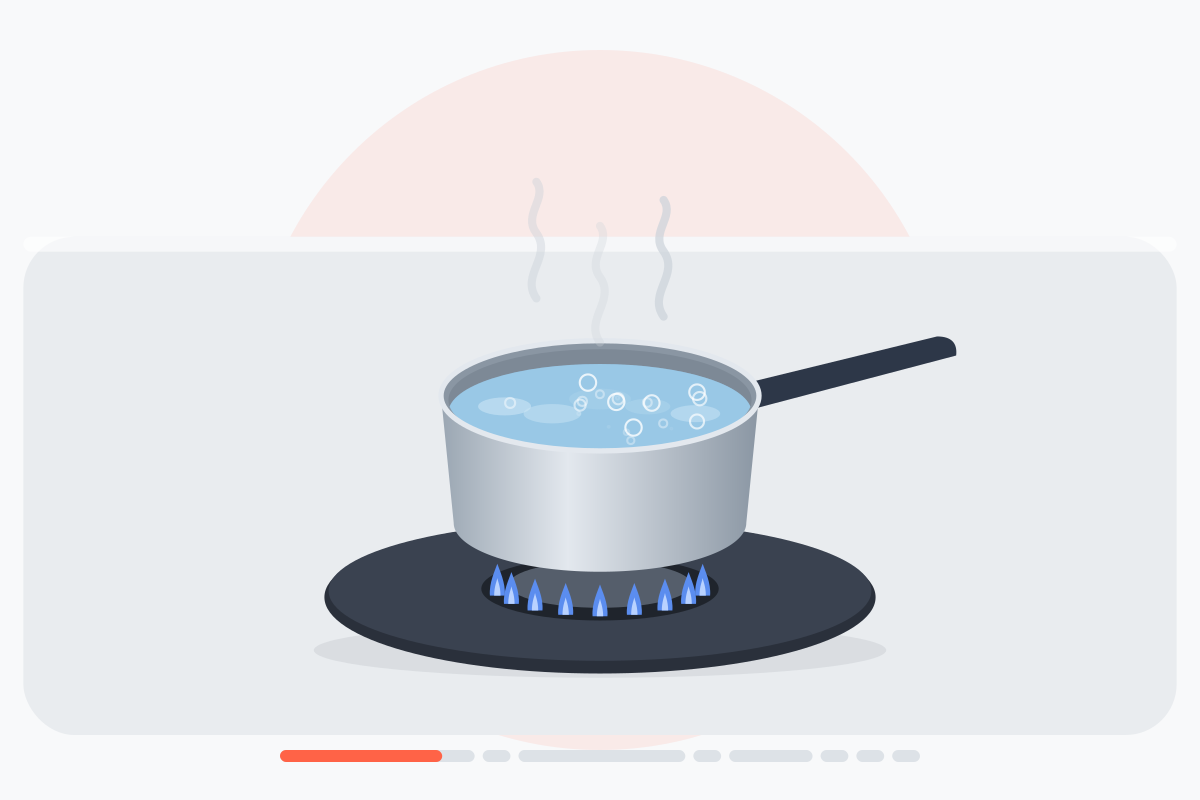
Bring the water to the boil: Fill a small saucepan (about 16 cm / 6 inches wide holds up to four eggs) with enough water to cover the eggs by at least 3 cm (1 inch) and bring it to a full boil over high heat. Keep the eggs in the refrigerator until the water is boiling: they go in cold, and the cooking time below is for eggs straight from the fridge. Estimated duration: 7 min.
-
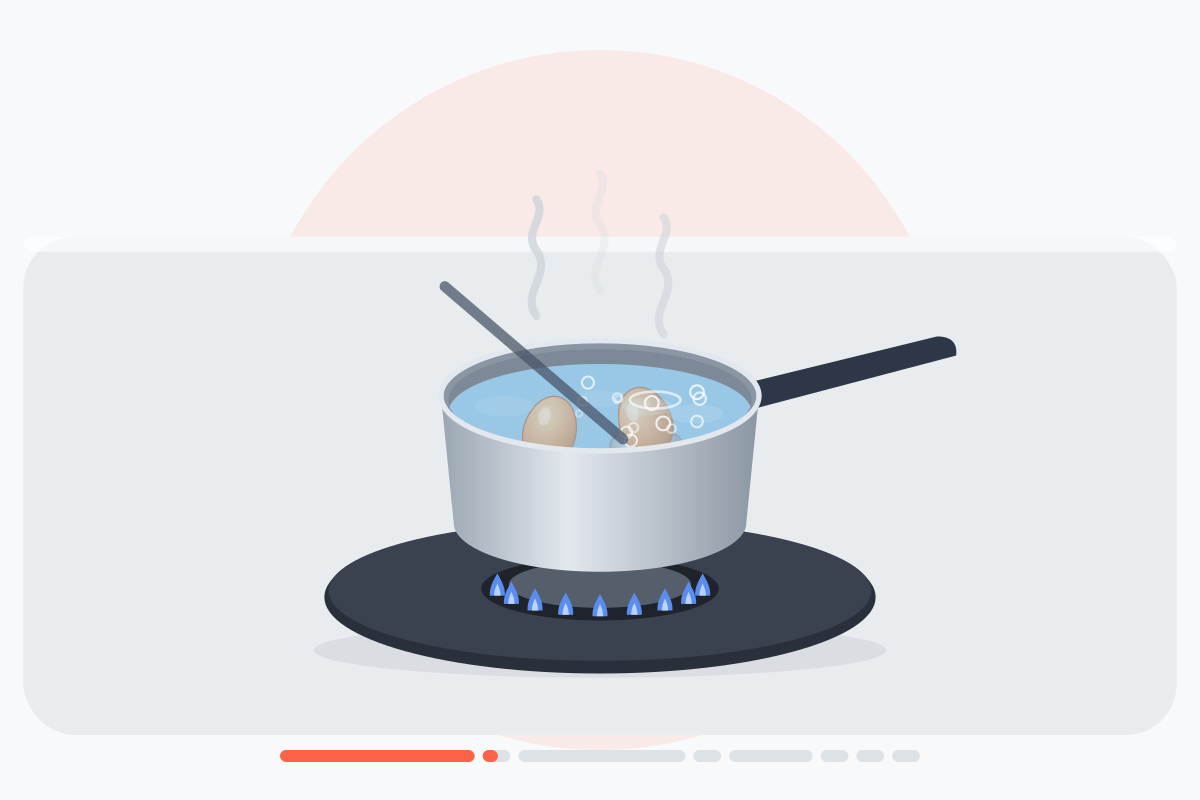
Lower in the eggs: Turn the heat down to medium-high so the water keeps bubbling gently. Take the eggs from the refrigerator and lower them one at a time on a spoon, letting the spoon touch the bottom of the pan before you slide it away, so the eggs do not drop and crack. Start the timer once the last egg is in. Estimated duration: 1 min.
-
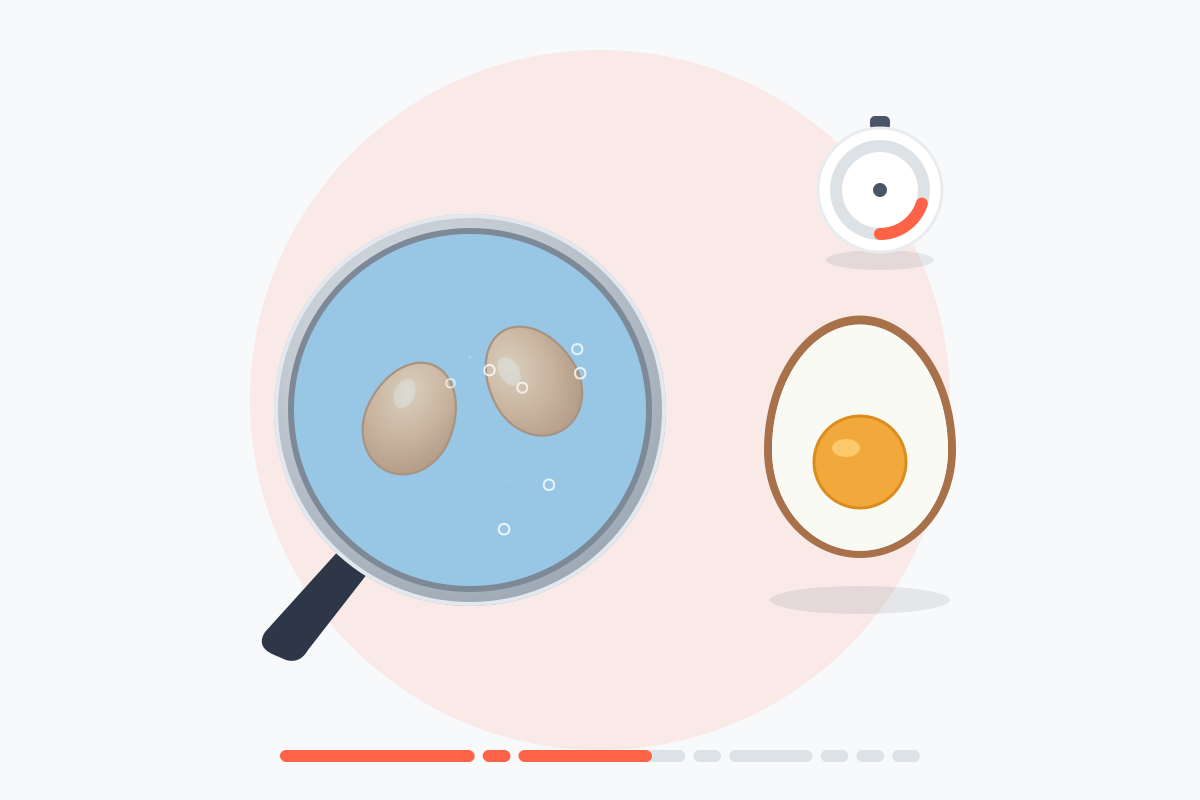
Boil the eggs: Keep the water at a gentle boil for 6 minutes for fridge-cold eggs of about 55 g (US large, UK/EU medium): the white sets and the yolk stays runny. RecipeTin Eats adds 30 seconds for 60 g eggs and 1 minute for 65 g eggs, weighed in their shells; that extra time is outside the 21-minute estimate. No fixed time is given here for heavier eggs. The 3 3/4 to 4 minutes in Isabella Beeton’s recipe are not used here. Estimated duration: 6 min.
-
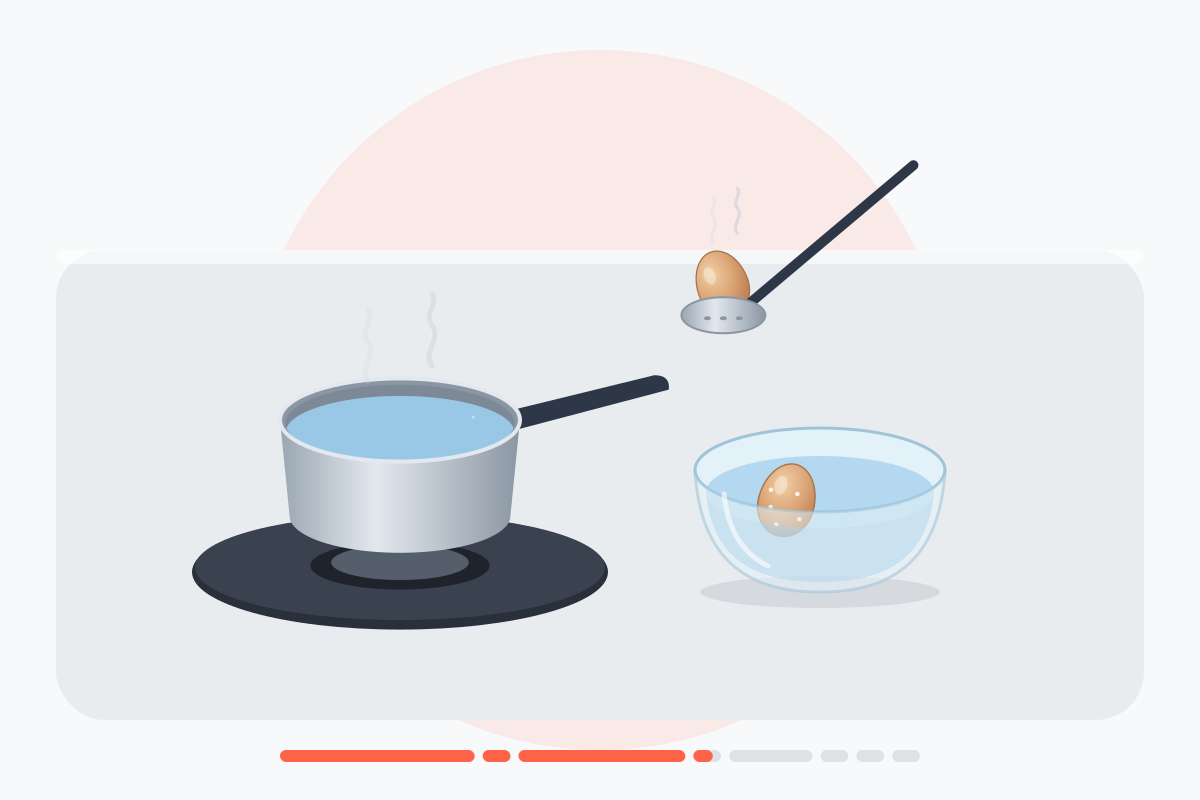
Cool the eggs in cold water: Lift the eggs out with a slotted spoon straight into a bowl of cold tap water (ice is optional) to stop the cooking and make the shells comfortable to hold. Leave them there while you make the soldiers: the toasting, buttering and cutting take about 5 minutes, so the eggs reach the table warm rather than piping hot. Estimated duration: 1 min.
-
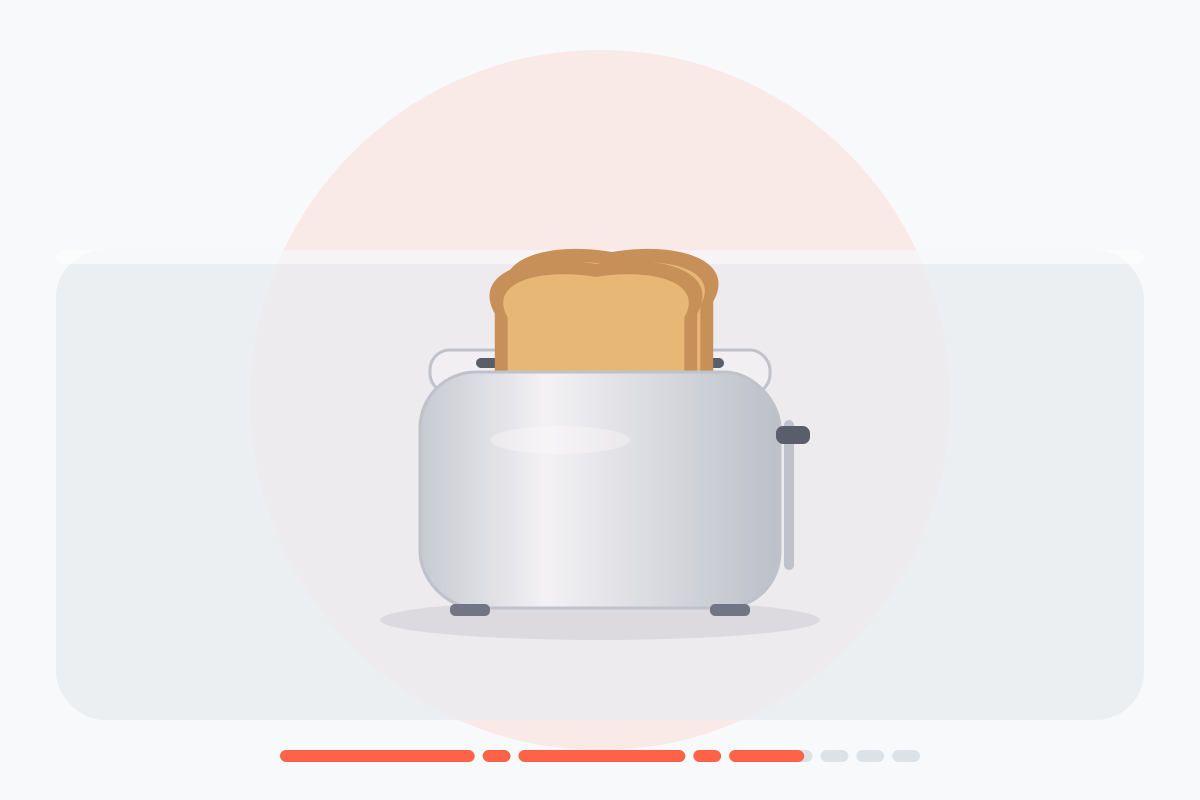
Toast the bread: Toast the slices in a toaster, or under a grill, turning once, until golden on both sides without letting them blacken. Estimated duration: 3 min.
-
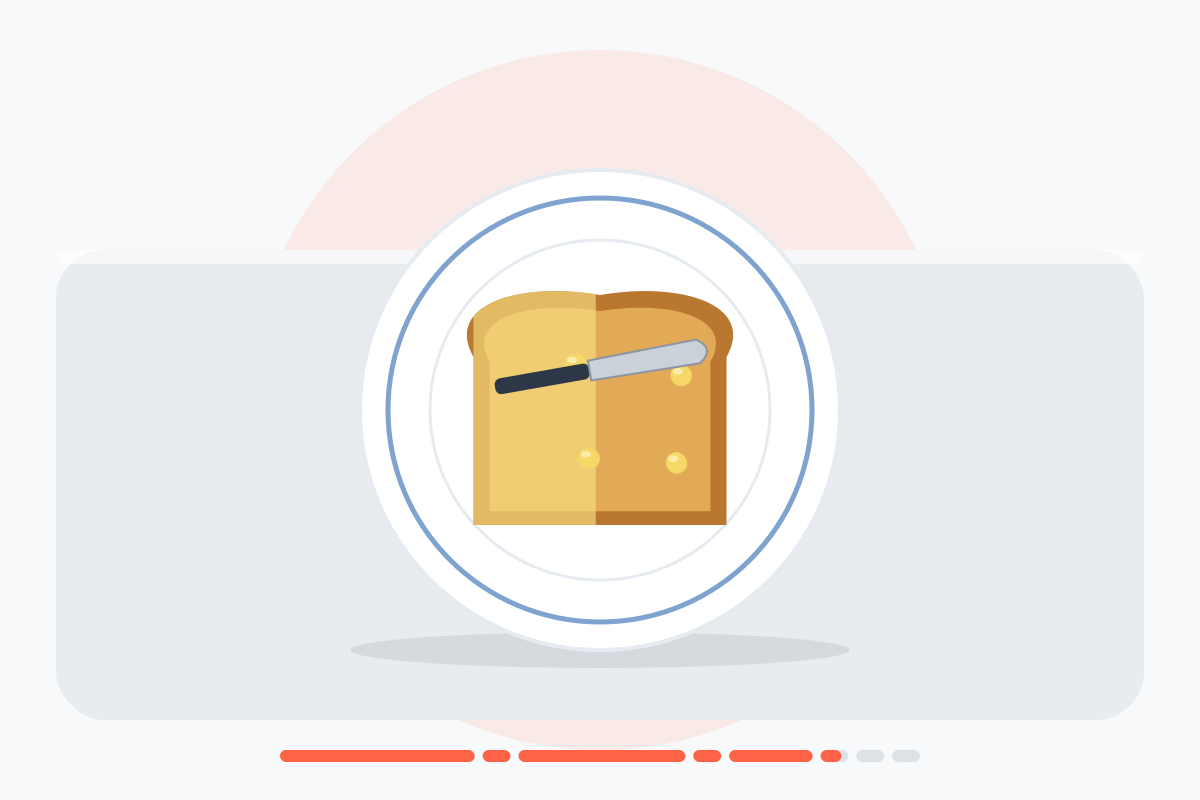
Butter the hot toast: Lay each hot slice on a plate, dot it with small pieces of butter, give them a few seconds to begin to melt, then spread the butter lightly over the surface. Butter each slice as soon as it comes out, while the toast is hot. Estimated duration: 1 min.
-
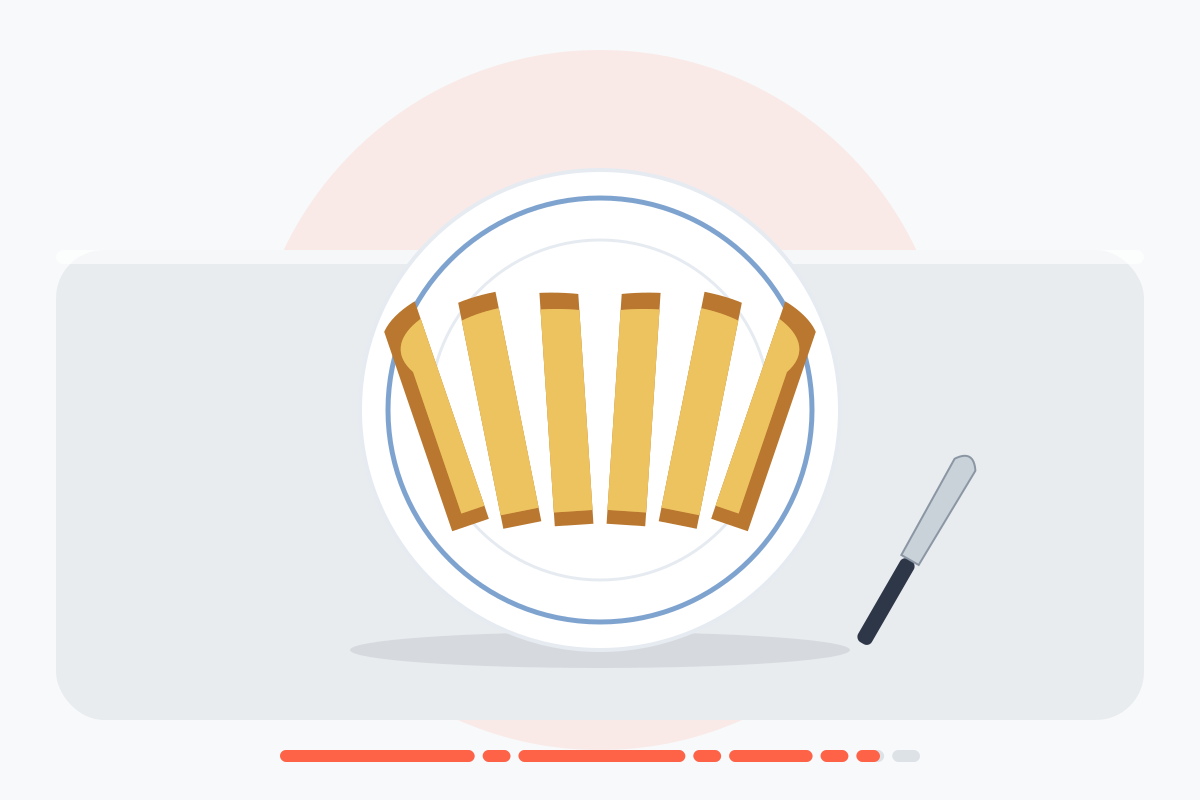
Cut the toast into soldiers: Trim the crusts if you like (many cooks keep them), then cut each buttered slice on its own into narrow fingers 1 to 2 cm (1/2 inch) wide. Cutting one slice at a time stops the butter from being squeezed out of a stack. Estimated duration: 1 min.
-
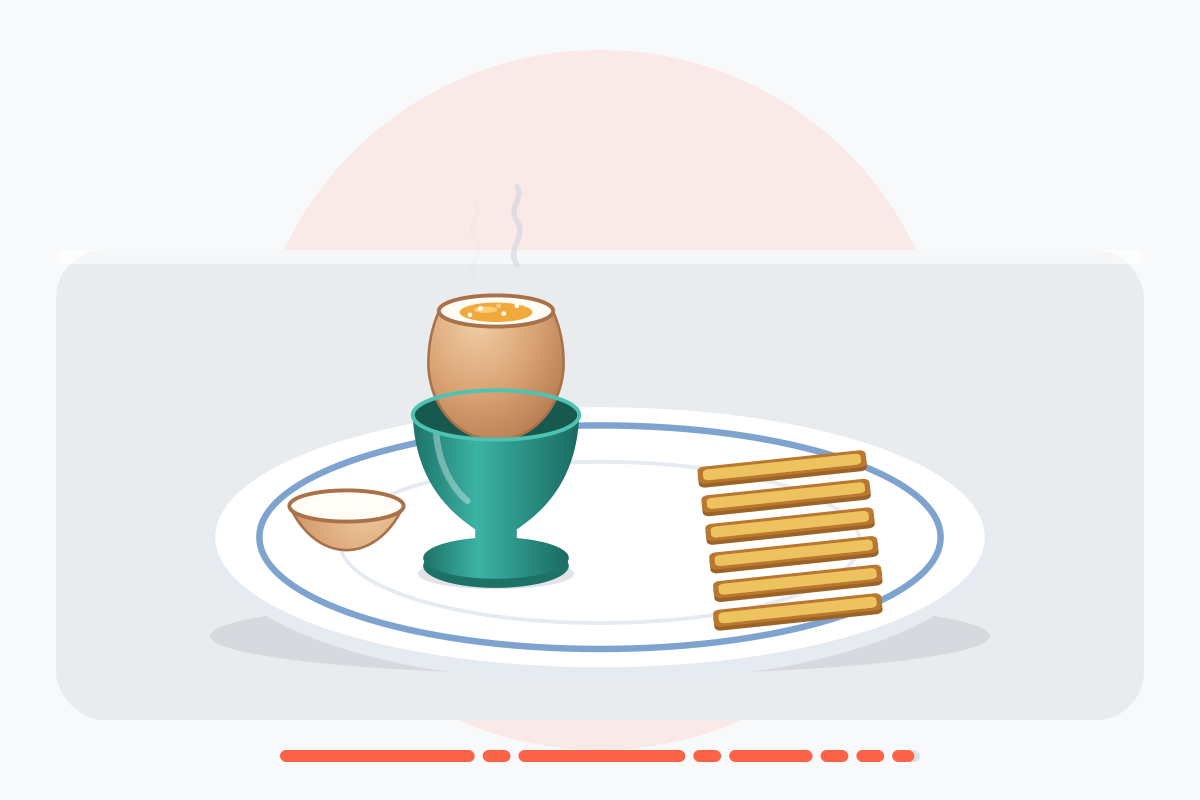
Open the eggs and serve: Lift the eggs out of the water, dry them and stand each one upright in an egg cup. Slice off the top of the shell and white with a sharp knife, or tap round it with a spoon and lift it off, to uncover the runny yolk. Add a pinch of salt if you like and serve at once with the soldiers alongside for dipping. If the white under the cap is still clear and liquid, do not eat that part and boil the next batch about 30 seconds longer. Estimated duration: 1 min.
Tips for good soldiers and good eggs #
- Cook the eggs straight from the refrigerator. The 6-minute time is for cold eggs of about 55 g (US large, UK/EU medium); eggs left at room temperature would cook faster.
- Lower the eggs on a spoon. Let it touch the bottom of the pan before you slide it away, so the eggs do not drop and crack against the pan.
- Start the timer when the last egg is in the water, not when you begin lowering them, and keep a gentle bubble rather than a violent boil.
- Pick a sturdy bread, a day or two old. A slice a little more than 7 mm thick holds up in the yolk better than a thin, soft one.
- Butter the toast the moment it pops up, while it is hot: the butter melts and spreads thinly instead of staying in lumps.
- Cut one slice at a time, never a stack, so the butter is not pressed out.
- To cook more, scale by the number of eggs. Allow one slice per egg; the 16 cm pan holds up to four eggs, beyond that use a larger pan with more water. We have not tested large batches.
- Allergens. The dish contains egg, milk (butter) and gluten (wheat bread), unless you use gluten-free bread and a dairy-free spread.
Why the egg stays in its shell #
The shell is part of the dish. The egg is served unpeeled, upright in an egg cup, with only the top removed, so the yolk stays enclosed until the first soldier breaks the surface. The shell also holds the heat, and the cup keeps the egg from rolling about.
That is what separates this page from our soft-boiled eggs guide, which cooks eggs in the same way but peels them and has no toast in its steps: there the egg is an ingredient for ramen, salads or toast. Here the egg and the toast are cooked, timed and served together, and toasting, buttering and cutting each have minutes of their own in the total.
‘Soldiers’ is usually explained by the way the fingers stand in a row beside the egg; the French call them mouillettes, from mouiller, to dip or wet. The gesture is the same on both sides of the Channel.
Where the 21 minutes go #
Every action sits inside the total, counted one after another: bringing the water to the boil (7 minutes), lowering in the eggs (1), boiling them (6), moving them to cold water (1), toasting (3), buttering (1), cutting the soldiers (1), then opening the eggs and serving (1). That adds up to 21 minutes: 7 of preparation and 14 of cooking.
Only the 6-minute boil and the 3-minute toast are corroborated by modern recipes. The other durations are editorial estimates, and nothing here was timed by us. The 7 minutes for heating the water is the least reliable figure: it depends on your hob, your pan and the volume of water, and pouring water from an electric kettle into the pan is quicker.
The eggs wait about 5 minutes in cold water while you make the toast, so they reach the table warm rather than piping hot, and the yolk keeps cooking slightly at first. If your toaster can work during the boil, the soldiers will be ready sooner and the eggs hotter, but we count the steps in sequence and do not promise less than 21 minutes.
The soldiers: bread, butter, cut #
The bread matters as much as the egg. Choose a sturdy loaf, ideally a day or two old (Beeton warns against new bread), cut in slices a little more than 7 mm thick. Gluten-free bread works too. Toast it until golden on both sides without letting it blacken.
Butter at once. Set small pieces of butter on the hot slice, give them a few seconds to begin to melt, then spread them in a thin layer. No source gives a weight, so use just enough butter to cover the surface without pooling.
Finally cut each slice on its own into fingers 1 to 2 cm wide, narrow enough to go through the opening in the shell. The crusts are optional: Beeton trims them, most modern soldiers keep them.
Reading doneness under the cap #
Opening the egg is the test. Slice the top off with a sharp knife, or tap round it with a spoon and lift off the cap. You are looking for a ring of opaque, set white around a glossy, liquid yolk. At 6 minutes, the source of the time describes the white as only barely set.
If you see clear, runny white under the cap, the egg is underdone: do not eat the translucent white, and boil the next batch about 30 seconds longer. RecipeTin Eats adds 30 seconds for 60 g eggs and 1 minute for 65 g eggs, weighed in their shells; that extra time is outside the 21-minute estimate. No fixed time is given here for heavier eggs. If the yolk has set, take the next batch out a little sooner.
If any shell fragments fall into the egg, lift them out with the tip of a spoon before serving.
Food safety: a runny yolk means lightly cooked egg #
In this recipe the yolk is runny by design, so the egg is lightly cooked and the dish is not safe by default for everyone. The FDA advises cooking eggs until both the yolk and the white are firm, and lists children, older adults, pregnant people and people with weakened immune systems among those at greater risk of severe illness.
For babies, young children, pregnant people, older adults and anyone with a weakened immune system, cook the egg until the white and the yolk are both firm. We give no tested time: it is a different result from this recipe, its time is not part of the 21 minutes, and a firm yolk can no longer be dipped.
The UK Food Standards Agency takes a different position for eggs in the UK: for more vulnerable people, lightly cooked hen eggs should be British Lion or Laid in Britain eggs; otherwise they should be thoroughly cooked or pasteurised. That rule is specific to those UK eggs, so do not apply it to eggs of another origin. Severely immunocompromised people should seek medical advice.
Use fresh, uncracked eggs kept in the refrigerator and cooked straight from it, and discard any with a cracked shell. Serve at once. If cooked eggs do sit at room temperature, do not leave them for more than 2 hours (1 hour if it is above 32 °C / 90 °F). This recipe is written for hen eggs; quail eggs follow the site’s separate guidance (see our complete quail egg guide ).
In the kitchen: the water is boiling and the toaster is hot. Lower the eggs on a spoon and keep children away from the pan.
Serving ideas and variations #
Serve the eggs in their cups on a plate with the soldiers alongside, and a pinch of salt on the yolk if you like. Nothing else is needed: the dish is about the contrast between a warm, runny yolk and crisp, buttery toast.
For a change from toast, you can dip cooked asparagus spears or bread cut another way; these are optional ideas, not in the ingredient list and not part of the 21 minutes. The recipe follows one simple rule, one egg to one slice, so scale it by the number of eggs.
This dish is served at once and does not keep: do not make it ahead or reheat it, as we have no tested advice for that.
Common problems #
The white is still clear. Boil the next batch about 30 seconds longer, and do not eat the translucent part of the opened egg.
The yolk has set. The egg cooked too long or was smaller than 55 g: take the next batch out a little sooner and do not stretch the cold-water wait.
The shell cracked in the pan. The egg dropped too hard. Lower it on a spoon that touches the bottom, and discard any egg that is cracked before cooking.
The soldiers are soggy or cold. Butter the bread as soon as it comes out, cut the slices one at a time and serve at once.
The butter pools. Let it melt for a few seconds on the hot toast, then spread it thinly instead of piling it on.
Source and credits #
This article draws on Isabella Beeton’s The Book of Household Management (London, S. O. Beeton, published in monthly parts 1859–1861, first bound edition 1861), recipes 1656 (boiled eggs), 1725 (dry toast) and 1726 (hot buttered toast, which quotes Alexis Soyer on cutting buttered toast), read in the electronic edition of eBook #10136 on the Project Gutenberg site . The book is in the public domain (Project Gutenberg classifies it so in the United States, and Beeton died in 1865), so attribution is optional; this is not legal advice, and we give it out of honesty. Only facts and procedure are taken (eggs lowered on a spoon, bread a day or two old, butter set in small pieces on the hot toast, slices cut one at a time): no sentence of the book is reproduced. Modern recipes (RecipeTin Eats, Taste of Home, simplehomeedit, Consumer Reports) were used only for facts: the 6-minute time, the cold-water step and the order of the steps, with the toast made while the eggs cool. Changes from Beeton: her shorter egg times are replaced by 6 minutes for fridge-cold eggs of about 55 g; a toaster or grill replaces the toasting fork before the fire; narrow fingers replace her four pieces or triangles per slice; the ratio of one egg to one slice and the two servings are editorial; and apart from the 6 and 3 minutes, all durations are editorial estimates. We have not cooked or timed this recipe ourselves: it follows the cited sources.
Frequently Asked Questions #
How long do dippy eggs with toast soldiers take? #
The total is 21 minutes, counting the steps one after another: bringing the water to the boil (7), lowering in the eggs (1), boiling (6), cooling (1), toasting (3), buttering (1), cutting the soldiers (1), and opening the eggs and serving (1). Only the 6-minute boil and the 3-minute toast are corroborated by modern recipes; the other durations are editorial estimates, and we timed nothing ourselves. The water coming to the boil weighs the most and depends on your hob. If you toast the bread while the eggs boil they will be hotter, but we count the steps in sequence.
Are dippy eggs safe for everyone? #
No. The yolk is deliberately runny, so the egg is lightly cooked. According to the FDA , children, older adults, pregnant people and people with weakened immune systems are at higher risk of severe illness, and both yolk and white should be firm. For them, cook the egg until the white and yolk are firm; we give no tested time for that, because it is a different result from this recipe. Use fresh, uncracked, refrigerated eggs. For quail eggs, see our complete quail egg guide : they must be fully cooked for everyone.
How do I know the egg is cooked properly once the cap is off? #
Look at the white under the cap. It should form an opaque, set ring around a glossy, liquid yolk. If it is still clear and runny, the egg is underdone: do not eat the translucent white, and boil the next batch about 30 seconds longer. RecipeTin Eats adds 30 seconds for 60 g eggs and 1 minute for 65 g eggs, weighed in their shells; that extra time is outside the 21-minute estimate. No fixed time is given here for heavier eggs. If the yolk has set, the egg cooked too long or was smaller: take the next batch out a little sooner.
Why do the eggs sit in cold water while I make the toast? #
The cold water stops the cooking and makes the shells comfortable to hold. The eggs wait there for about 5 minutes, the time it takes to toast, butter and cut the bread, so they arrive warm rather than piping hot; the heat inside the egg keeps cooking it slightly at first, so do not stretch the wait. If you can toast during the boil, the eggs will be hotter, but the page still counts the 21 minutes in sequence.
Soldiers, mouillettes or something else to dip? #
They are the same buttered toast fingers: ‘soldiers’ in Britain (because they stand in a row beside the egg) and mouillettes in France (from mouiller, to wet or dip). You can also dip cooked asparagus spears or another bread cut into strips; these ideas are not in the ingredient list and are not counted in the 21 minutes. Gluten-free bread works too. For another egg-on-toast breakfast, see our sunny side up quail eggs on toast .
How is this different from your soft-boiled eggs page? #
Our soft-boiled eggs page covers the general method and peels the eggs, with no toast in its steps. Here the egg stays in its shell, stands in an egg cup, and the toast, buttered and cut into soldiers, is part of the recipe and of the 21-minute total.